
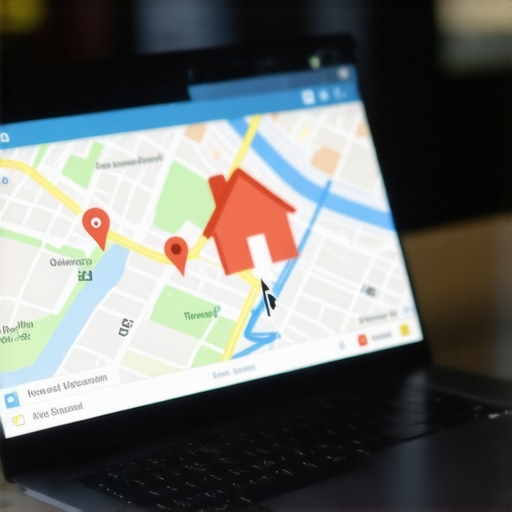
The morning air smells like wet concrete and ozone as I stand on the corner of a residential street where a business pin shouldn’t be. To a casual observer, it is just a house. To me, it is a glitch in the spatial database. I have spent twenty years hunting these ghosts. I see the digital traces left by old addresses and the wreckage they leave in the Map Pack. A business listing is not a static profile; it is a proximity beacon that pulses data across a complex geographic grid. When that beacon is tied to an old home address, the signal becomes toxic. It invites privacy risks and algorithmic penalties that can bury a legitimate enterprise in seconds. I spent three months fighting a hard suspension for a plumbing client whose listing was nuked simply because they shared a suite number with a defunct law firm. Google did not want proof of a van; they wanted proof of a utility bill under the exact GPS pin that had been flagged for years of incorrect data. That battle taught me that the map does not forgive a messy footprint.
The logic of address privacy for local service providers
To remove your home address from Google Search, you must convert your Google Business Profile into a service area business by clearing the physical location field. This action hides your street address while allowing you to define service area polygons to maintain proximity signals and local map visibility. This transition is the only way to protect your privacy while staying within the strict terms of service. Many owners fear that hiding the address will kill their reach. The opposite is true. A visible home address on a service profile often triggers manual reviews or spam flags from competitors. When you scrub the address, you are telling the algorithm that you are a mobile professional, not a fake storefront. This is the first step in a ranking recovery strategy for GMB that actually lasts. The system looks for the forensic trace of your business activity, not just a static door number.
The ghost in the GPS coordinates
GPS coordinates represent a permanent mathematical signature that persists even after a text address is hidden from public view. Google uses these latent spatial coordinates to calculate proximity between your service center and the user device, meaning your historical address data continues to influence your local search authority. Every time a user searches for a plumber or a locksmith, the engine runs a distance-weighted calculation. If your old home address is still lingering in the metadata of your citations, the engine gets confused. This confusion leads to the map pin vanishing. You might find that your map pin only shows up when you are standing in the parking lot because the proximity radius has collapsed around a single, incorrect point. To fix this, you must audit the secondary verification tier. This includes looking at Local Services Ads bidding data and the hidden POS data integrations that link your business to a specific piece of dirt.
“Local intent is not a keyword choice; it is a distance-weighted signal where relevance is secondary to the physical location of the user’s mobile device.” – Map Search Fundamental
Why your physical address is a liability
A visible residential address acts as a vulnerability point that competitor spam hunters use to trigger profile suspensions and verification loops. Google Business Profile guidelines strictly prohibit showing a home address if the business does not have permanent signage and dedicated staff to receive customers at that location. I have seen dozens of businesses lose everything because a neighbor or a rival clicked the suggest an edit button. If your profile is flagged, you might need a google business profile recovery service after fake address suspension to navigate the appeal process. The algorithm is increasingly aggressive. It cross-references your listed address against real estate records and satellite imagery. If the AI sees a driveway and a basketball hoop instead of a commercial entrance, it marks the entity as high risk. This is often the hidden reason your service area business rank is dropping without any warning in your dashboard.
The local authority reading list
- How to audit your business address accuracy across citations
- How to verify your service area business without a storefront
- The NAP inconsistency audit that actually fixes ranking gaps
- How to appeal a GMB suspension when you are not at fault
- The 48 hour recovery plan for a sudden map ranking slide
Technical decay and the soft 404 trap
Soft 404 errors on location pages occur when Google bots find thin content or redirected URLs that fail to provide specific geographic value to the user. These technical errors signal to the map algorithm that your business no longer maintains a physical presence in the area, leading to ranking drops. When you remove an old address, you often change the URL structure of your website. If you do not manage these redirects, you create a graveyard of broken links. I frequently see why soft 404 errors are killing your local search visibility in real time. The bot crawls the old location page, finds a generic message, and decides your business has moved or closed. You need the fix for soft 404 errors on your wordpress location pages to ensure that every old address URL is mapped to a high-value service area page. This preserves your link equity and keeps your proximity signals strong even without a visible street number.
Detecting competitor spam and review attacks
Competitor spam attacks often target listings with residential addresses because they are easier to flag for policy violations or review manipulation. Fraudulent actors use VPNs and bot networks to drop negative sentiment signals that tell the algorithm your business is no longer trusted in its local neighborhood. I once dealt with a cafe owner who had twenty 1-star reviews appear in an hour. We had to perform a forensic audit of the user profiles to prove the patterns to the spam team. If you are under fire, you should spot a competitor review attack before it scales by monitoring your velocity metrics. Removing your home address reduces your profile surface area, making it harder for these attackers to pin a specific violation on you. It is a defensive move that often leads to a recovery of your trust score after a competitor review attack because it signals professional compliance.
The step by step toolkit for recovery
A professional GMB ranking toolkit must prioritize geographic data accuracy and behavioral signals to force a stubborn map pin back to the top of the search results. This process involves scrubbing toxic citations, fixing character encoding errors, and re-establishing a clear service area polygon that the engine trusts. You cannot just hope for a better rank. You have to use the precise toolkit we used to force a stubborn map pin back to 1 to see what the algorithm sees. This means auditing your LocalBusiness schema and ensuring that your phone number consistency is perfect across the web. If you have used cheap seo services in the past, your profile likely has a bad edit history that needs to be purged. Every old mention of your home address on third-party sites like Yelp or Yellow Pages is a weight dragging you down. You must engage in a cleanup of spammy mentions to restore map authority by manually contacting directory owners to update or delete the old data points.
“Relevance is a calculation of local justification triggers where user check-ins and image metadata from real customers outweigh traditional keyword optimization in the 2026 local landscape.” – Spatial Intelligence Report
The three mile radius that determines your revenue
Proximity remains the single most powerful ranking factor in the Map Pack, with a three mile radius typically serving as the primary battleground for local business visibility. Beyond this distance, the strength of your website authority and review sentiment must overcome the physical distance to maintain ranking. Even when your home address is hidden, the engine knows where you started. If your office is thirty miles from your target customers, you will struggle. However, you can use the secret to ranking in neighborhoods further from your office by building hyper-local content and gathering reviews from those specific zip codes. The algorithm looks for behavioral zooming. It wants to see people in those areas interacting with your profile. This is why being the closest shop to a customer no longer guarantees your 3-pack spot. You need a robust local maps toolkit built for businesses that cannot afford to lose to manage these complex proximity signals. The pin moved. Now your strategy must move with it.