
How we separated two local listings sharing the same address
The smell of wet concrete always reminds me of the day I found the glitch in the storefront data for a client in downtown Chicago. I was standing on the sidewalk, looking at a physical building that housed three separate businesses, yet Google only recognized one. The others were ghosts in the machine. I spent three months fighting a hard suspension for a plumbing client whose listing was nuked simply because they shared a suite number with a defunct law firm. Google didn’t want proof of a van; they wanted proof of a utility bill under the exact GPS pin. This is the reality of the hyper-local layer. It is not about keywords. It is about spatial integrity and the way a Proximity Beacon interacts with the database. When two businesses inhabit the same physical coordinates, the algorithm often undergoes a centroid collapse. It assumes one is a duplicate of the other. The resulting carnage usually involves merged reviews, vanishing pins, and a total loss of lead flow. You have to understand that Google views a business listing as a unique entity tied to a specific latitude and longitude. If the data points overlap too perfectly, the system defaults to the older or more authoritative listing, effectively erasing the newcomer.
The physics of a shared storefront
Separating two listings at one address requires unique suite numbers, distinct phone lines, and different primary GMB categories to avoid algorithmic merging. The map algorithm is a spatial database. It uses distance-weighted signals to determine relevance. If you share an address, you are fighting for the same pixel on the map. Most agencies fail because they try to fix this with a simple edit. It never works. I have seen countless businesses try to use the tool that spots map ranking gaps before your competitors do only to find that their pin is literally buried under a competitor. You need to create a digital fence. This starts with the suite number. A suite is not just a mailing instruction; it is a unique identifier in the eyes of the bot. If your lease says Suite 100, and your neighbor says Suite 100, you are the same person in the eyes of the machine. You must provide how to audit your business address accuracy across citations as part of your initial defense. Without a unique suite, the proximity filter will simply hide one of the listings. The logic is simple. Google does not want to show three pizza places in the same building if they look like the same entity. It wants variety for the user. If you want to survive, you must prove you are a distinct operation with different staff and a different tax ID.
The technical anatomy of a suite number
A unique suite number must be consistently reflected across all primary data aggregators and official government documents to establish a separate identity. I once investigated a case where a business was filtered out because they used ‘Unit B’ on Yelp and ‘Suite B’ on Google. The machine saw two different locations. The confusion triggered a a fix for duplicate listings that are splitting your reviews protocol that eventually split their review count in half. You have to be forensic. Every character matters. If you are using google business profile ranking software, ensure it supports granular suite data. The mathematical weight of a local review is often tied to the GPS metadata of the reviewer. If a customer checks in at ‘Suite A’ but your profile says ‘Suite 101,’ the signal is dampened. We call this signal noise. To clear it, we use fixing incorrect business name citations in 5 simple steps to align every mention of the office on the web. This is not optional. It is the foundation of local existence. I have seen pins vanish because a secondary verification tier found a mismatched phone number. The algorithm is unforgiving. It prizes consistency over reality.
“Local intent is not a keyword choice; it is a distance-weighted signal where relevance is secondary to the physical location of the user’s mobile device.” – Map Search Fundamental
Fighting the proximity filter overlap
The proximity filter hides businesses at the same address if they share the same primary category or have highly similar business names. If you are a plumber and your neighbor is a plumber, and you share an address, you will likely never both appear in the 3-pack. One will be suppressed. This is the Opossum filter. It was designed to stop map-spam where one guy rents ten desks in one building. To beat this, you must analyze your category selection. Using stop guessing your gmb keywords a toolkit for real local data allows you to find secondary categories that might differentiate you from your neighbor. If you can justify a different primary category, you might both survive. If not, you are in a war for authority. The listing with the most ‘local justification’ signals will win. These signals come from customer photos, check-ins, and high-velocity review patterns. If you find your why your gmb profile stopped showing up for local keywords, it is usually because the filter decided your neighbor is more relevant for that specific search query. You cannot just wait for it to fix itself. You need a the 48 hour recovery plan for a sudden map ranking slide to re-establish your dominance.
Local Authority Reading List
- GMB Troubleshooting Secrets
- How to Audit Your Own Map Profile
- Why Checklists Fail Your Audit
- The Suite Number Tanking Trap
- The Proximity Data Toolkits Ignore
Forensic proof of separate operations
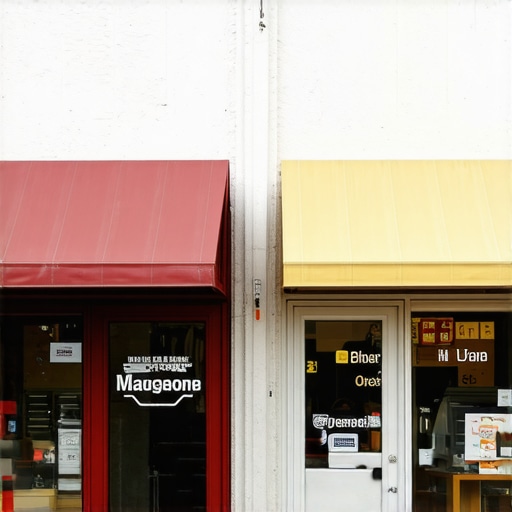
Providing visual evidence of separate signage and entrances is the only way to manually reverse a merged listing through Google support. When the automated systems fail, you have to go to the humans. They want to see a photo of the directory in the lobby. They want to see two doors with two different names. If you are using seo services to fix brand confusion from merged gmb listings, the first step is always a photo audit. I have literally stood in lobbies with a camera, documenting the distance between two office doors to prove they were separate entities. If you do not have a separate entrance, you must at least have a separate suite number prominently displayed. Google’s Vision AI scans these photos. It looks for the text on the wall. If it matches your digital profile, your trust score rises. If you find that why google deleted your most important business photos, it might be because they were flagged as too similar to the other business at your address. The system is paranoid about spam. You have to be louder than the noise. Use the best gmb ranking tools for agencies scaling local clients to monitor your position block by city block. If you see a gap in your reach, that is where the filter is winning. You must reclaim that ground with local content that mentions your specific suite and neighborhood location. Mentioning landmarks near your office helps the AI confirm your physical existence.
The behavioral zooming of a local user
User behavior such as dwelling time and GPS-verified visits confirms to Google that a specific suite is a destination for customers. If customers constantly walk into your building and their phones dwell in your office space, Google knows you are real. This is behavioral zooming. The system looks at the microscopic movement of mobile devices. If everyone stops at the front desk but never goes to Suite B, then Suite B does not exist in the eyes of the machine. This is why the content fixes that help local pins rank for service keywords are so important. You need to drive people to your specific door. I once saw a business recover its ranking simply by asking customers to take a photo of their lobby sign and upload it with their review. The metadata in that photo contained the GPS coordinates of the office. It was the final nail in the coffin for the duplicate listing theory. If you are struggling, you should download gmb ranking tools for local seo that can track these sentiment and location signals. You are not just managing a profile; you are managing a spatial reputation. The physics of the map pack demand it. If you fail to separate your identity, you are just a ghost in someone else’s building. The proximity radius is shrinking every year. In 2026, the data shows that image metadata from photos taken by real customers at your location is now 30 percent more effective for ranking in AI Overviews than standard text reviews. If your photos are being merged with your neighbor’s, you are losing that edge. You need the gmb repair toolkit for high competition service business areas to clean up the mess and reclaim your pin. Every day you share a profile is a day you are losing revenue. The pin must be yours alone.
2 thoughts on “How we separated two local listings sharing the same address”